Interview with Nicci Schwartz
Can you share a little bit about yourself and your practice?
I am a multi-disciplinary mixed media and installation artist who resides just north of the Chattanooga City limits with my husband, three kids and several beloved fur babies. I have been involved in the arts for over 20 years in a variety of roles, from costume coordinator at a theater outside of Washington, D.C., to Executive Director of the Chattanooga Girls Choir. Today my practice centers on two distinct bodies of work. The Sacred: Weight of What Remains explores memory, family history, and generational inheritance through nostalgic collage, while The Sacred: Trees features moody atmospheric landscapes created with ink, tea and coffee washes, and intuitive drawing.

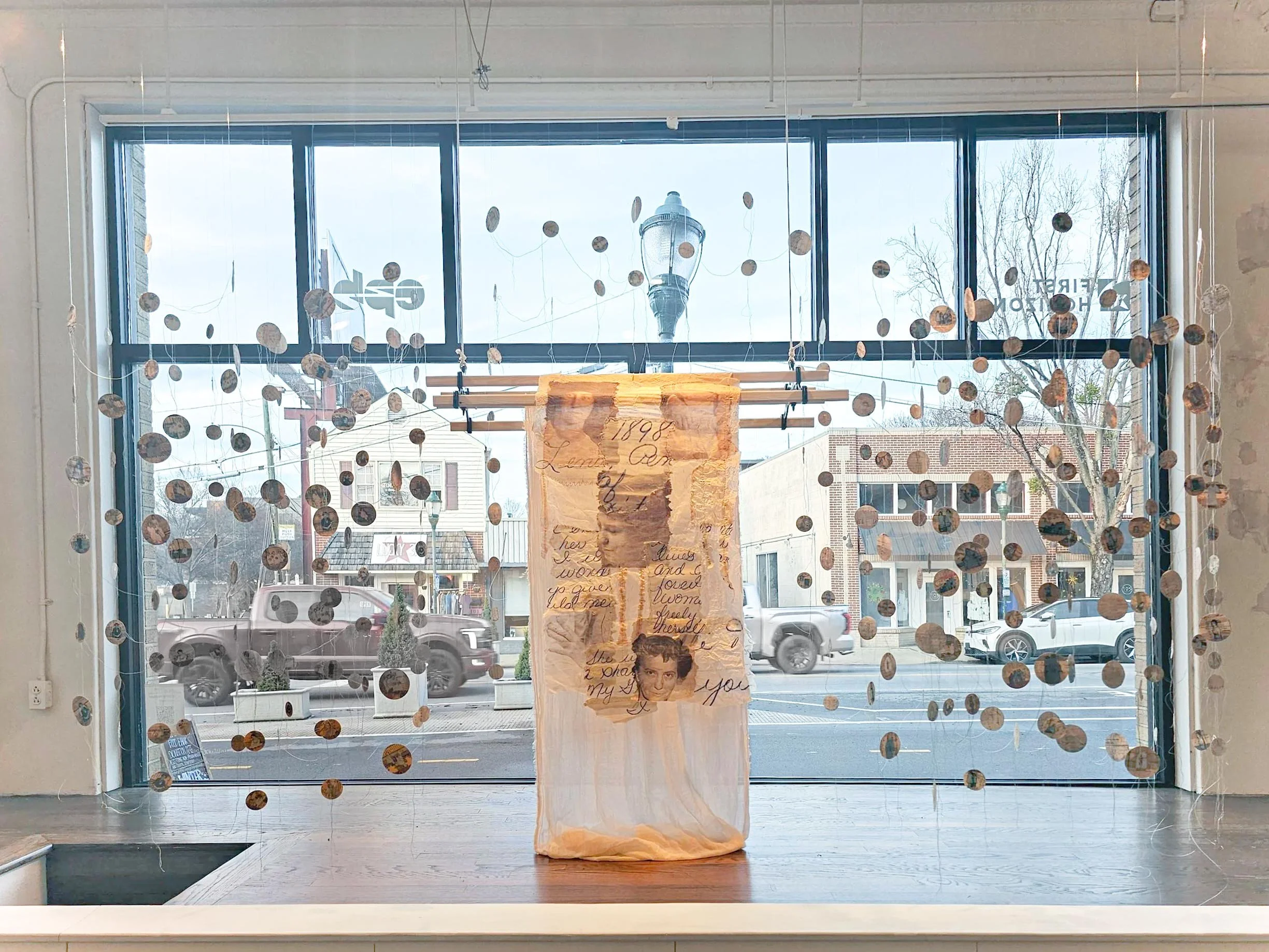
Portrait of the Artist alongside The Weight she Carried Installation
When/how did you begin working with vintage photographs? What is their significance within your work?
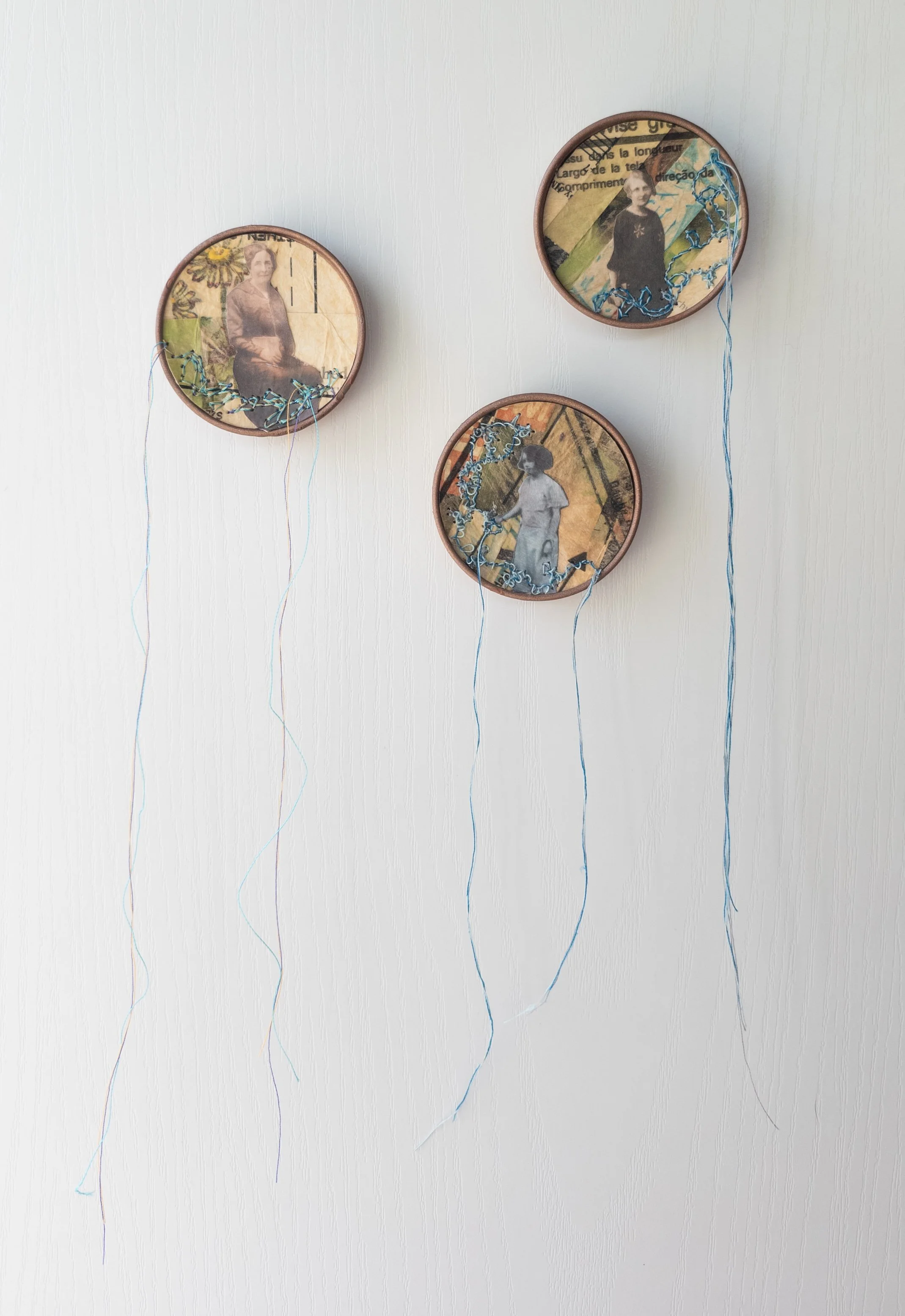
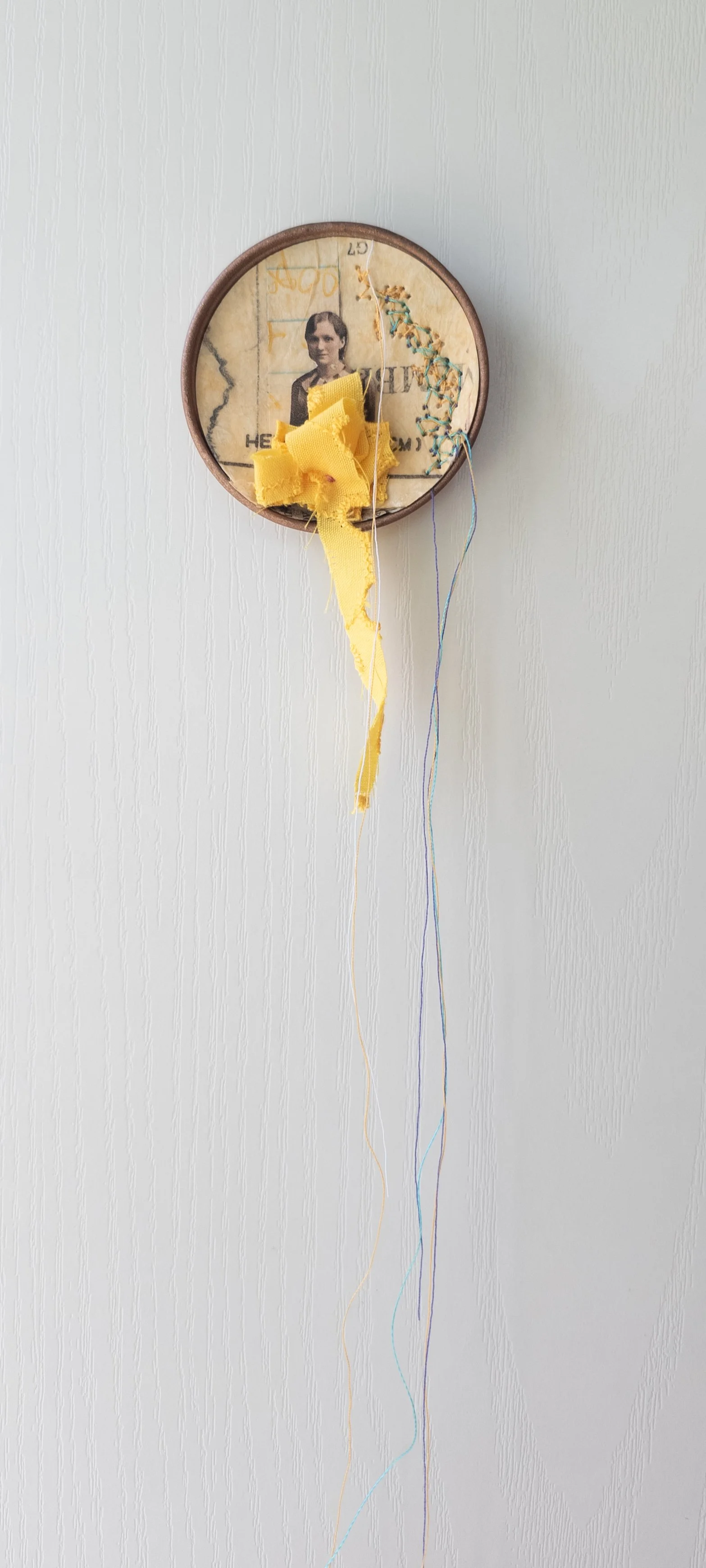
I am relatively new to working with vintage photographs within my art practice. Early in 2024, I had a thought of honoring my mother and her work as an amateur historian and genealogist by including her handwritten notes and diagrams within my artwork. I started making sketches of objects I associated with family members while sorting through my family archives and found inspiration in an essay that my mom wrote about my great-grandmother. That document combined with the many digital photos I have of both women was the direction I felt I was lacking. Since then, I have created a collection titled the Sacred: Weight of What Remains. This collection is a way for me to celebrate my fore mothers through letters, photos and ephemera I associate with them. Creating the work in this collection provides me an outlet to heal from the pain of loss and explore emotions tied to memories and generational inheritance while sharing images and stories that others so easily can connect with. By bringing these images and stories into public view, the weight of loss and memory is shared collectively with the community rather than privately. In this way, these women are remembered and honored for future generations.
How would you describe your process?
Ultimately, my process begins with storytelling. While the physical work involves building layers of handmade collage papers, vintage photographs, handwritten notes, thread, and found ephemera, each material is chosen because it carries a history or evokes someone I loved. My daughter helped me hang my installation, The Weight She Carried, in January and with each piece she helped hang she would ask questions about the women in the collages. I would share stories about each of them. When the installation opened, I found so many viewing the installation and connecting with pieces based on their own family heritage and memories. At a time when women's lives and contributions are too often overlooked, my hope is to write them back into the narrative so they are remembered rather than forgotten.
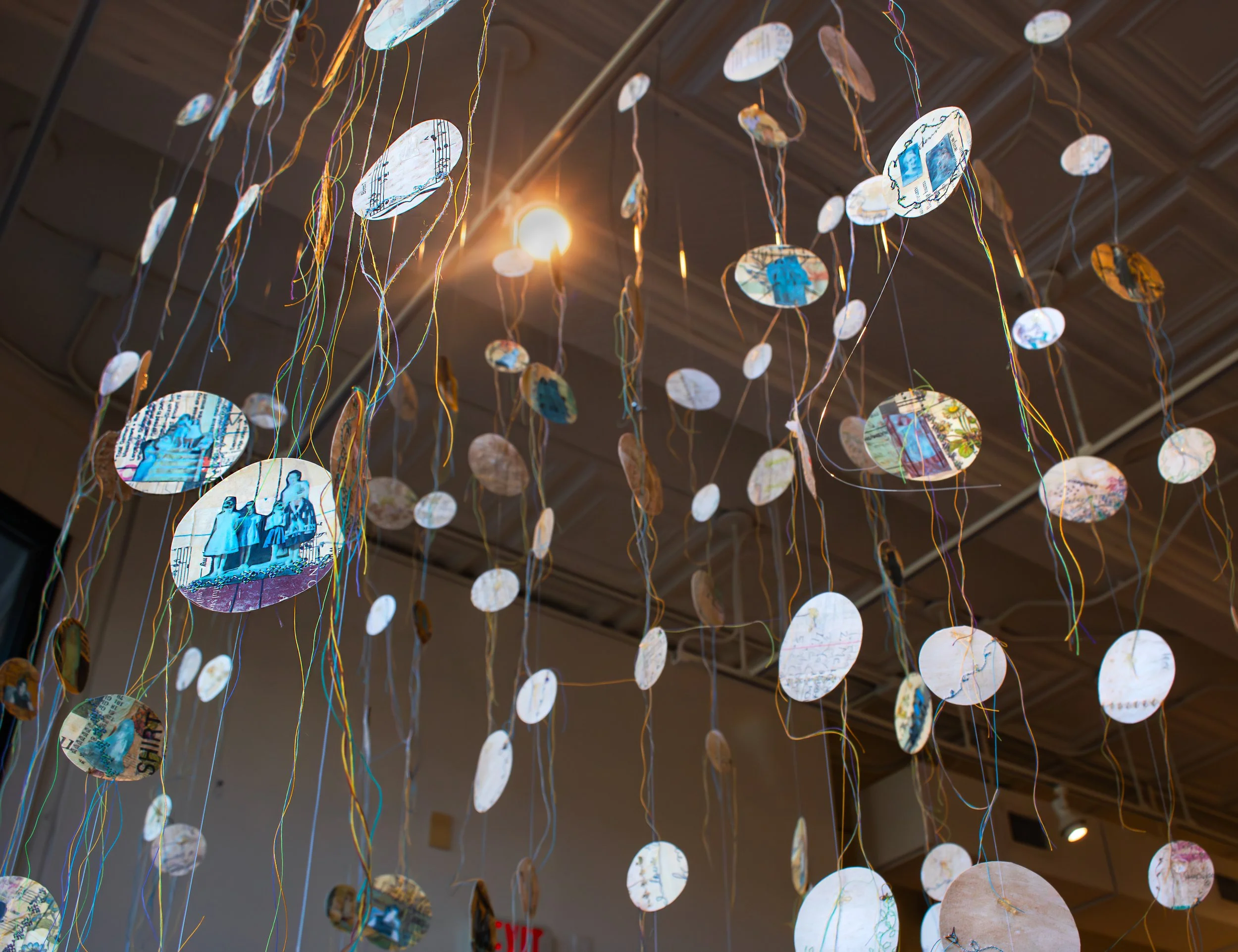
The Weight she Carried, Close Up
What themes are you exploring within your work?
Memory is the thread that connects all of my work. In The Sacred: Weight of What Remains, memory intertwines with generational inheritance, grief, and the ways family stories shape our identities. I was blessed to grow up with strong women in my family and to have personally known most of my great-grandmothers. The crux was that my great-grandmothers were all suffering from either dementia or Alzheimer’s by the time I was old enough to hold memories of them. As I inherited my mother's research, I found myself asking how I could carry her life's work forward without simply passing along boxes of documents that might feel overwhelming to future generations. Art became my answer.
What is a dream project you would like to bring to life in the next few years?
One of my biggest goal is to see The Weight She Carried travel beyond its original installation. I envision it being exhibited in spaces where viewers can move around and through the work rather than simply viewing it in a window or on gallery walls. There is a venue in Atlanta that has inspired me to think beyond traditional exhibition spaces, and I would love to see the installation realized there one day. It would also be deeply meaningful to have part of the installation become a permanent feature at one of the historical societies where my mother devoted so much of her time researching our family's history.
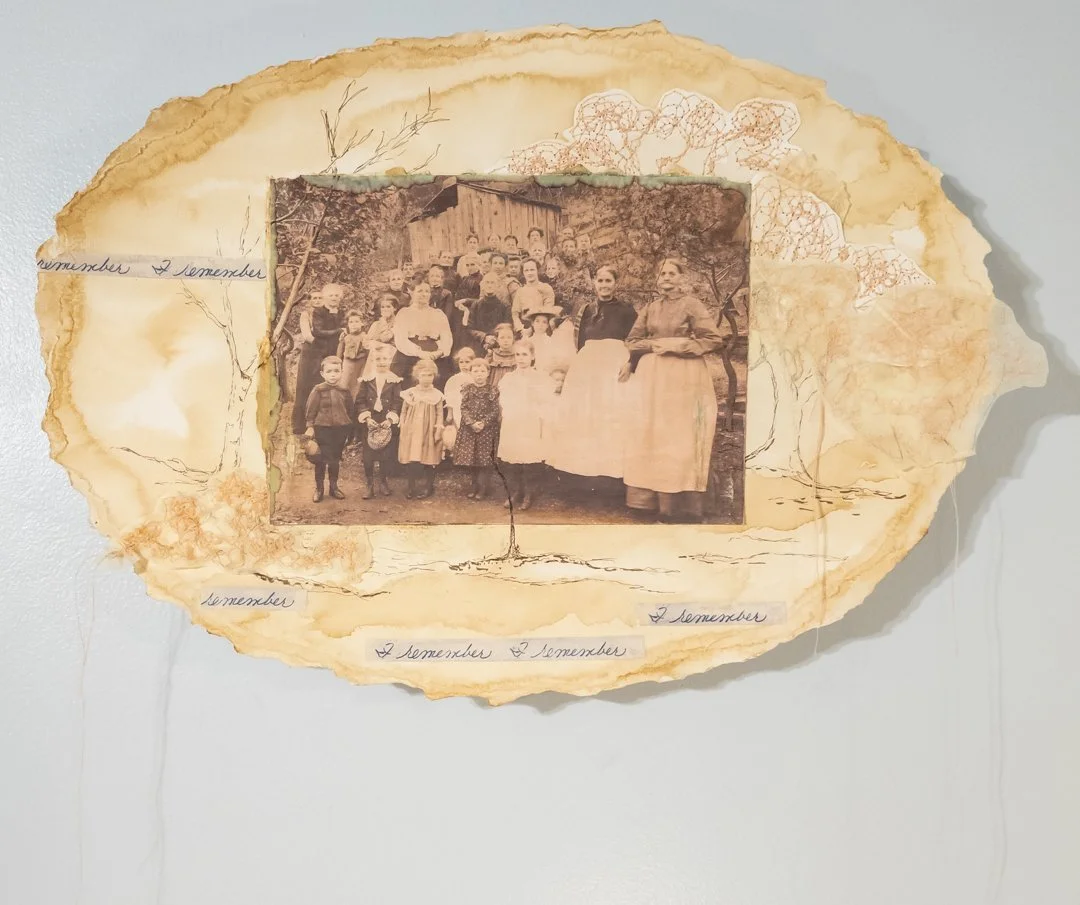
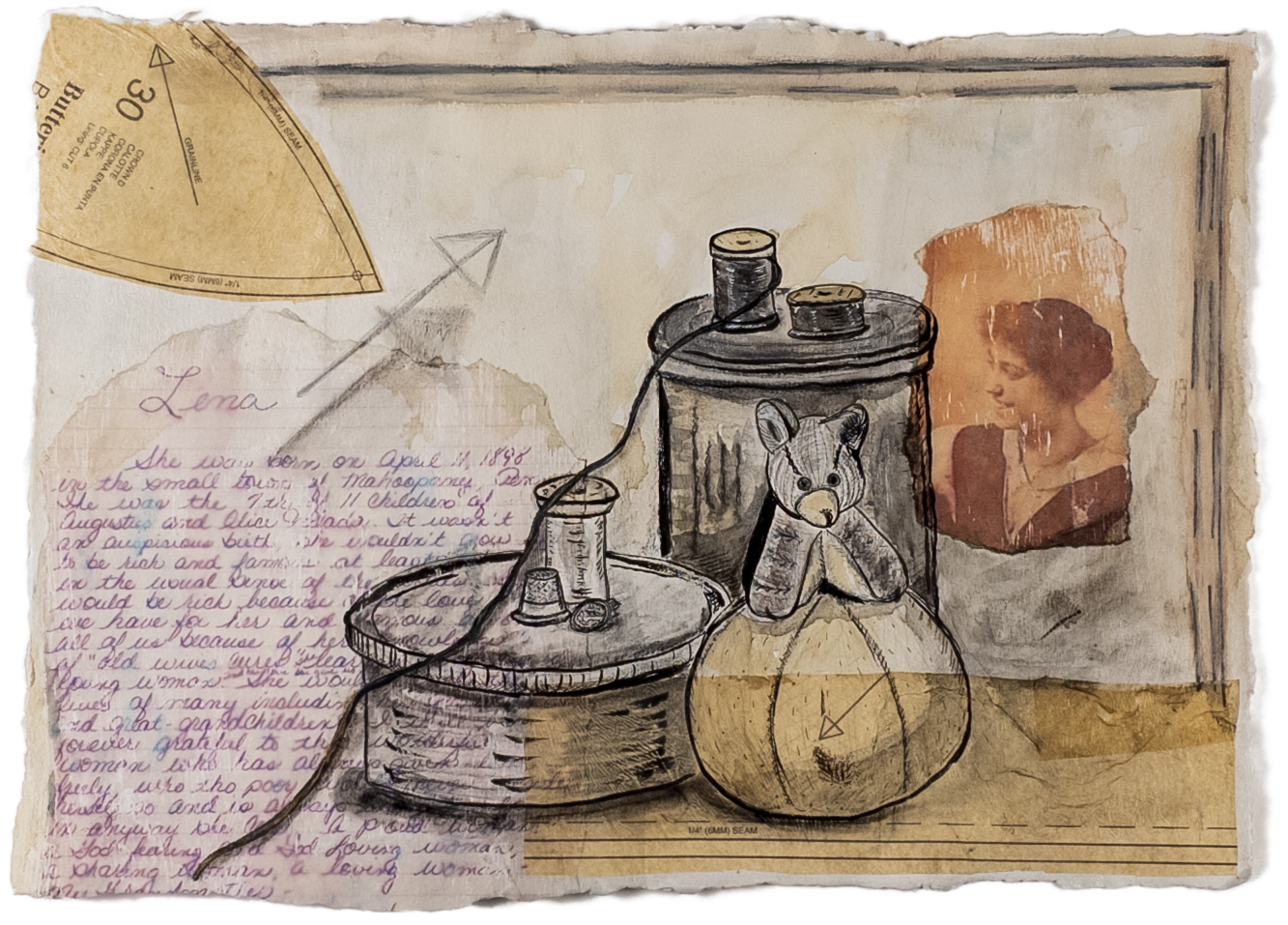
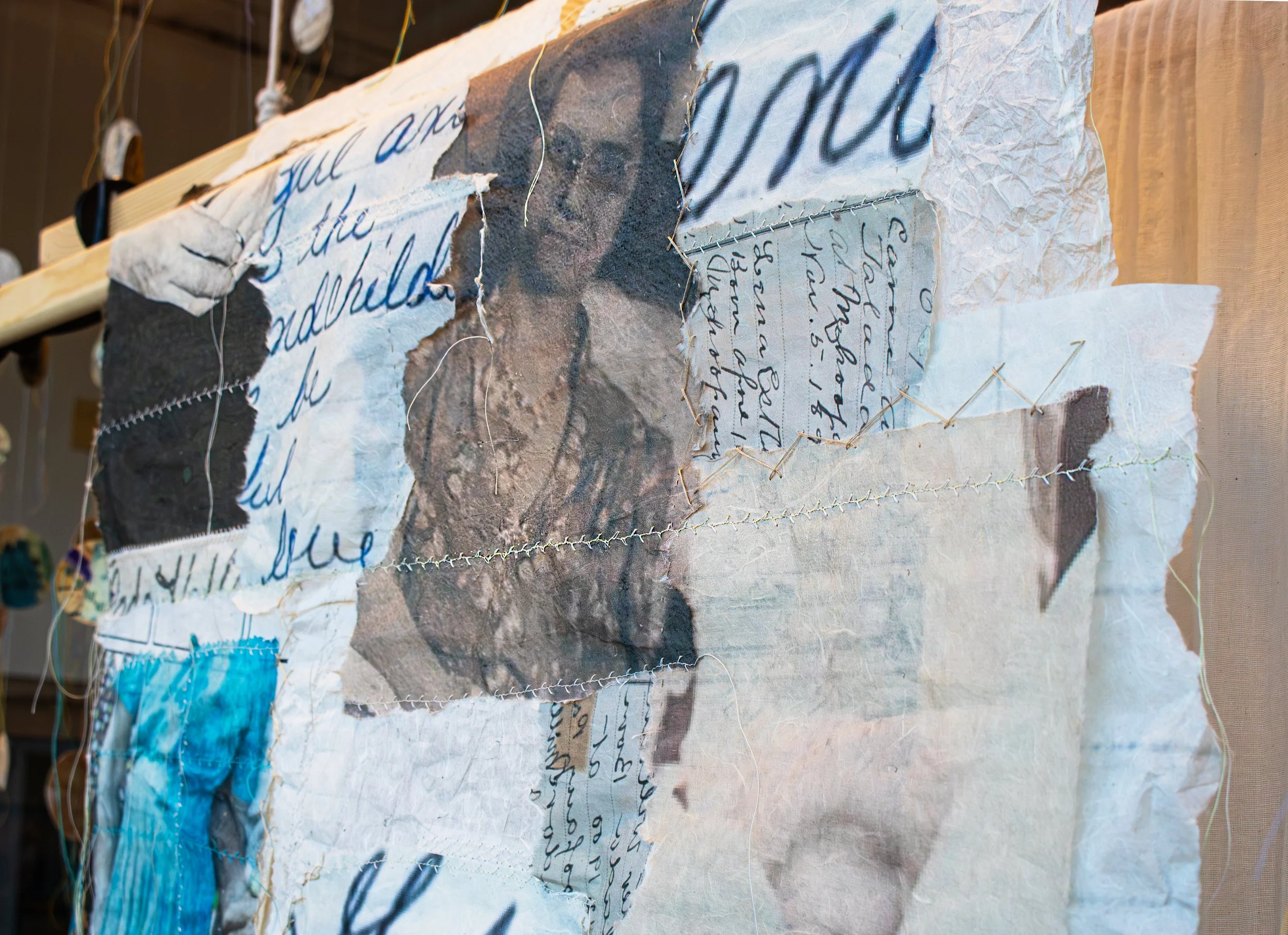
Nicci Schwartz
she/her | USA
Instagram: @Schwartz_Creative_Studios
Website: schwartzcreativestudios.com