
Interview with Adam Cochran
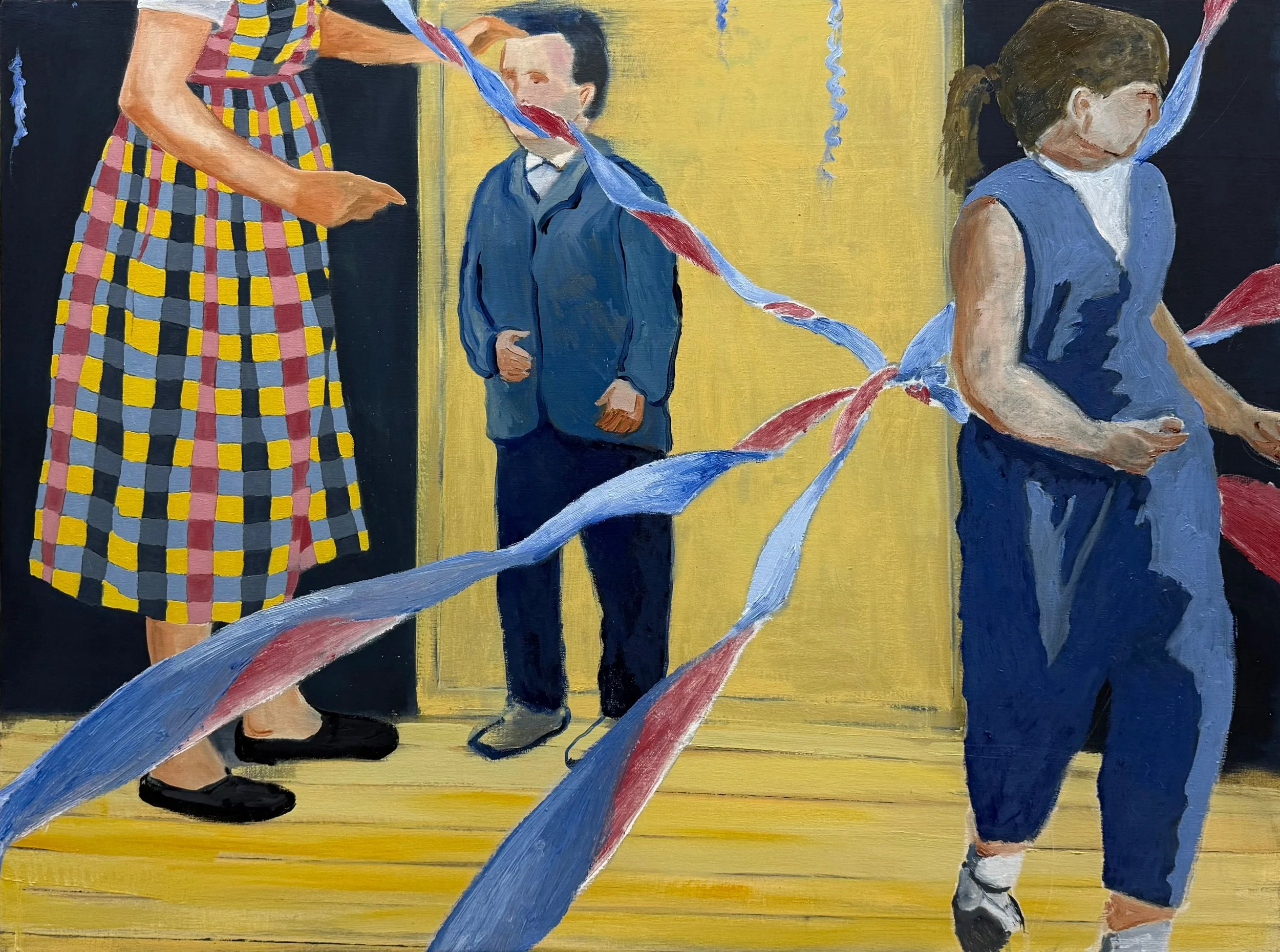
Party Time Excellent
When/how did you begin working with vintage photographs? What is their significance within your work?
I first started working with found/vintage photos around 2012. I was rummaging through discarded household items at a salvage yard in Berkeley, California, when I opened a chest of drawers and found hundreds of family photos that had been thrown away. Some were candid, some were posed, some were just piles of stuff, like Christmas presents. They were clearly from multiple random families, and I was overwhelmed. They looked like any regular photos you might find in any family album, but the sheer number of them was fascinating to me. Every one of the photos was a single moment in time that someone, somewhere, had thought in that second was worthy of remembering, and yet now they were all tossed away with no explanation. They made me feel connected to strangers in a new way I hadn't experienced before. I gathered a bunch up and started painting from them, abstracting and obscuring them, and they became a show. Eventually I realized that to be more personal, I would need to use images from my own family, and that's when I switched to old family slides and photos instead.
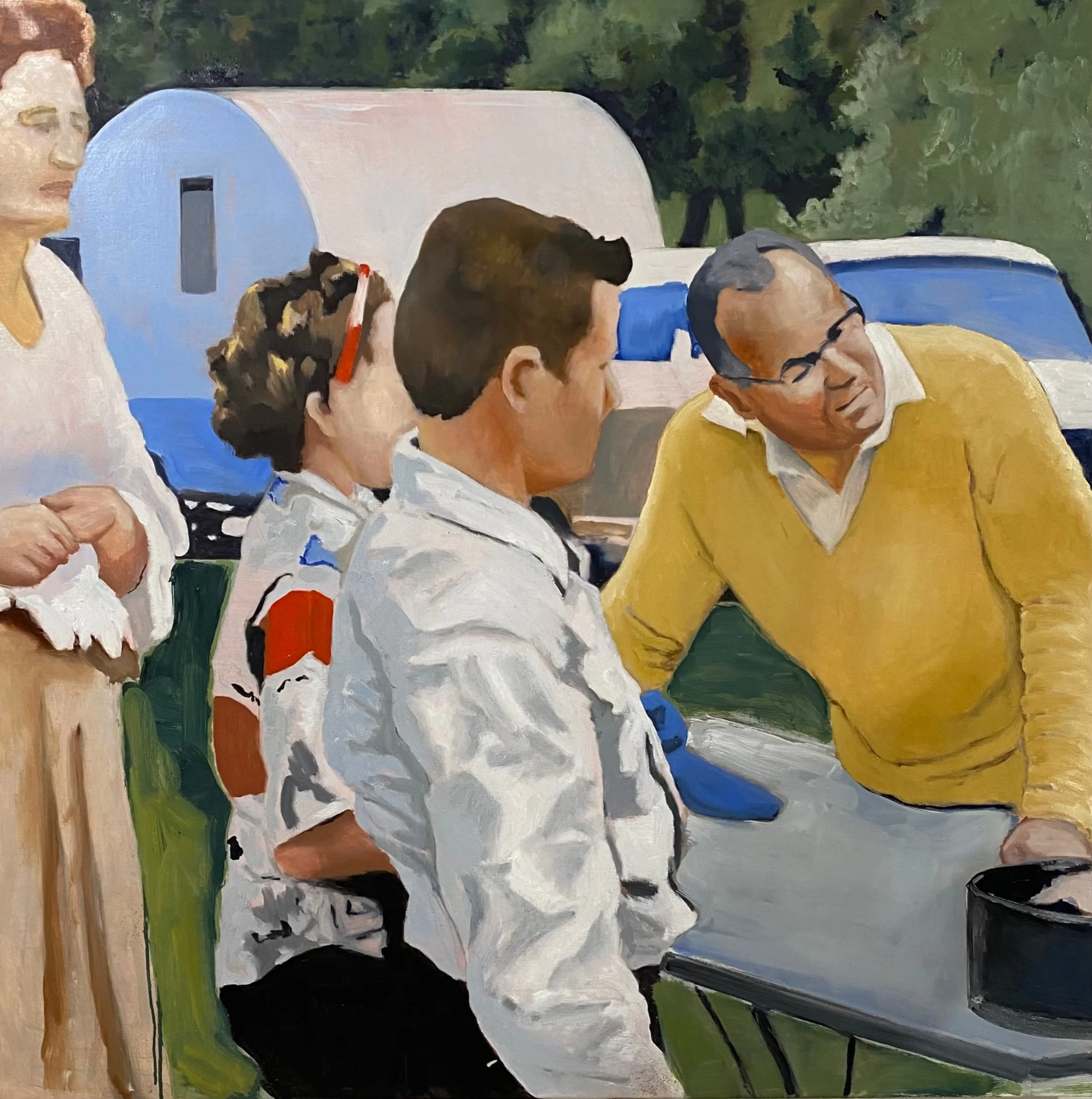
Picnic
How would you describe your process?
First I have to find the images, of course. Something in them has to be interesting enough to me that it catches my eye. I save the image and usually mull it over for a while. I may sketch it, or simply look at it a hundred times, and sometimes I lose interest and discard it. If it continues to hold my interest, I will see if I can make it even more interesting by cropping it, or changing the values, or the hues, or abstracting it in some way. I'm generally not very interested in paintings that are exact copies of photographs. When I have a final composition I like, I put it onto a canvas. This becomes the structure I work from, but since I am not a photorealistic painter, the way I paint abstracts the images even more as I work. I'll work on the painting until I am satisfied with it, but sometimes that means I paint over what I've done, or sand it away and start again. It's not out of the question to abandon a painting altogether.
What themes are you exploring within your work?
Human connection; empathy; family ties; suburbia; memory, whether real or imagined; the lie of nostalgia.

Small Color Study for Larger Painting
Do you work with found photographs or family archives? If you work with both, do you have a different relationship to the pieces while creating them?
I began with found photographs, but more recently have been using family photographs and slides my family took decades ago. The found photographs can be a great place to start, but for me, the vulnerability of using my own family's images felt more authentic, less distant. It also helped me begin to see members of my family that I had never known as regular people, instead of a mythologized version of a memory of a story I once heard.
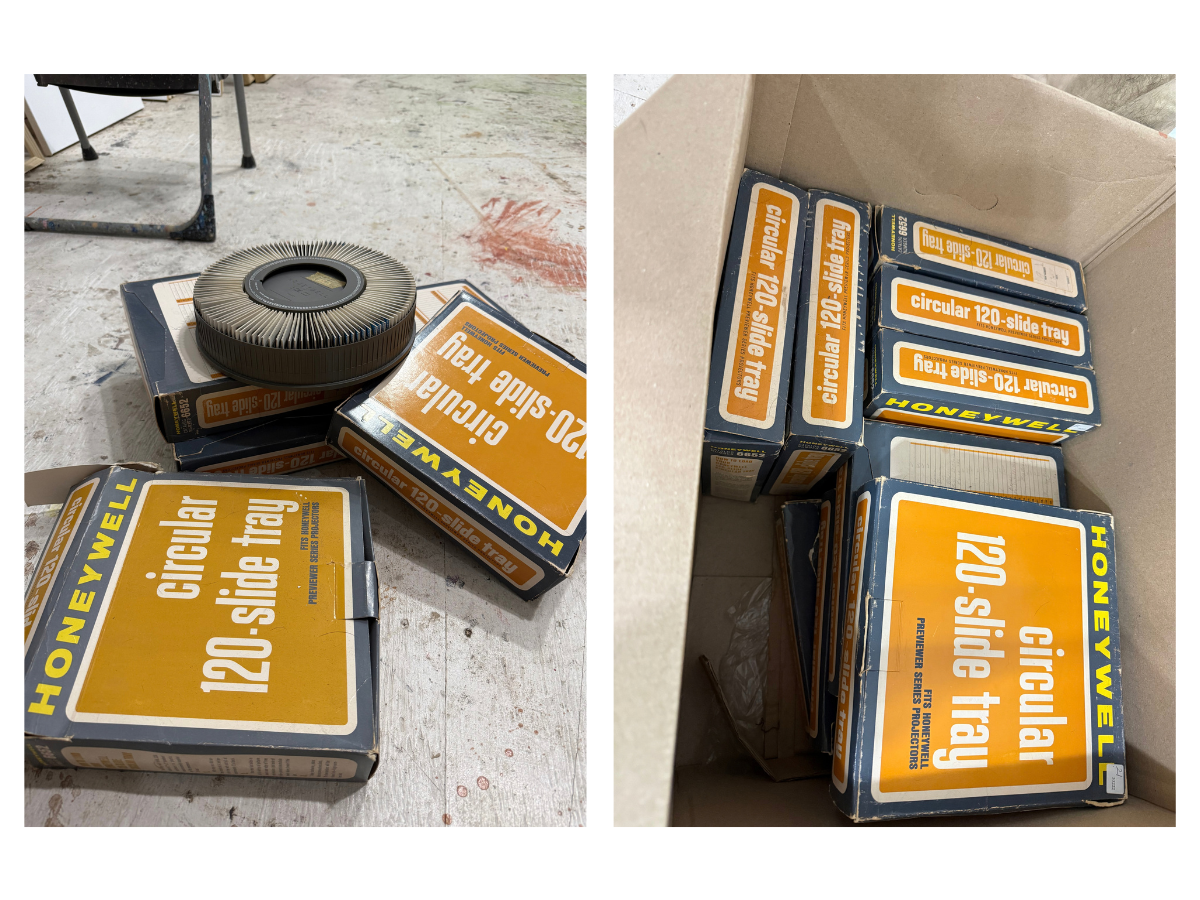
Thousands of Family Slides
What advice would you give to an emerging artist starting their journey using vintage photographs? What are some ways they could find their voice or unique styles?
Something my teacher and friend told me once that I have lived by ever since is this: when you find an image that you like, or that grabs your attention, keep it! Even if you don't know why you like it, tear it out of the magazine, screenshot it, or put it in your pocket. You can always decide later that you don't want it, but you may never find it again if you leave it and change your mind. Eventually you will have a portfolio of images that all speak to you in some way, and if you can find the thread of interest between them all, you can use that to help you figure out what you want to say to the world and why. Maybe you have no idea, for example, why you are drawn to candid photos in Life Magazine from the 1930s, but when you lay out 100 of them in front of you, the ones you've saved, you may start to figure it out.
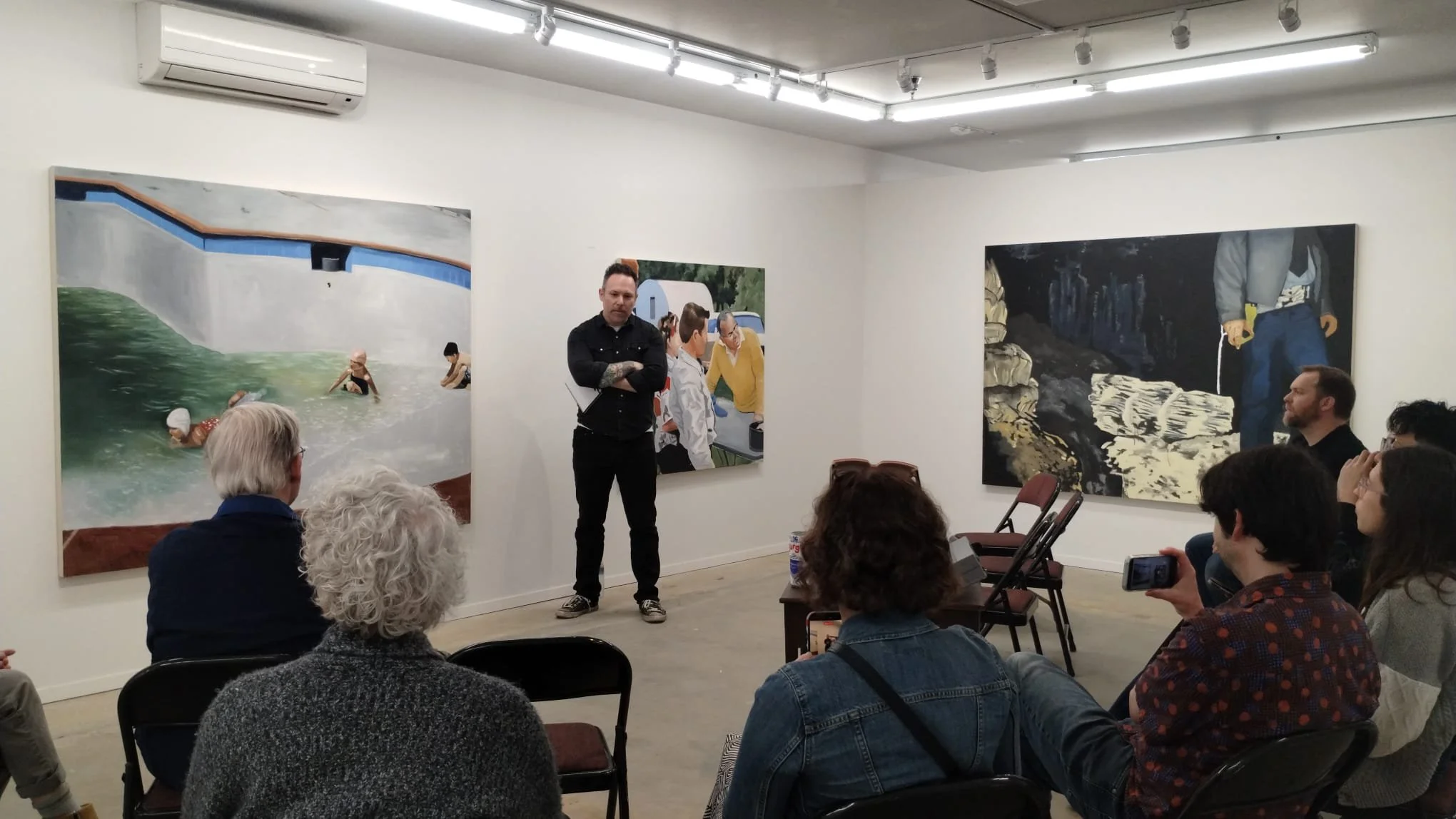
Artist Giving an Artist Talk

Early Painting from a Found Photograph
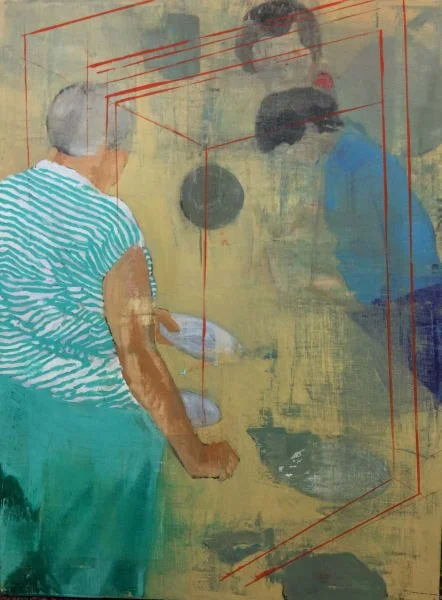
Turquoise Stripes (Another Example of an Early Painting)